
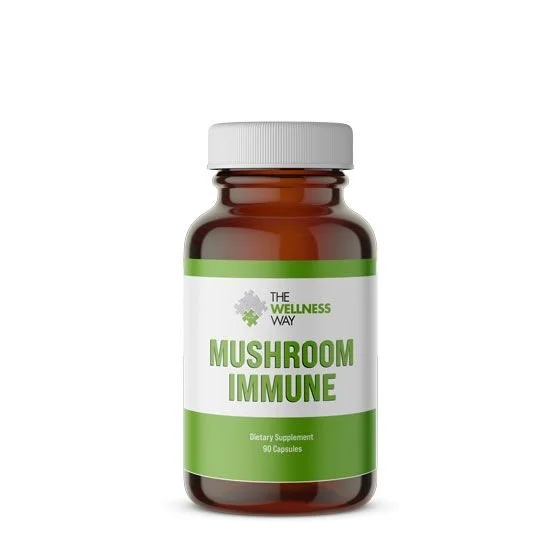
Mushroom Immune
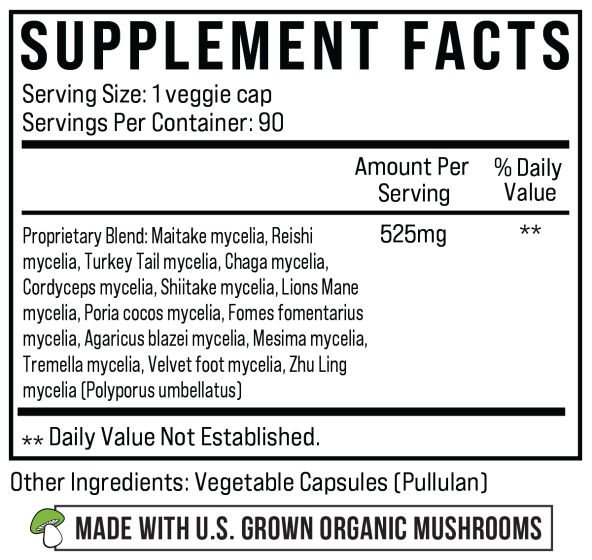
Mushroom Immune is a specialized supplement that combines mycelia from 14 medicinal mushrooms to create a synergistic blend designed to support a strong, well-functioning immune response. This level of support is particularly crucial during periods of immune deficiency, chronic stress, sleep deprivation, and acute or chronic illness.
Mushrooms have a long history of use as functional and healing foods. They have been recognized as a powerhouse for immune support for thousands of years, from ancient China through the discovery of penicillin.
The therapeutic benefits of these mushrooms stem from their individual constituents, including glucan polysaccharides and polysaccharide-peptides found in their cell walls. Polysaccharides are long chains of molecules with powerful immune-supporting properties. They’re capable of activating the immune response and supporting various immune cells, such as monocytes, neutrophils, dendritic cells, natural killer (NK) cells, and macrophages, as well as chemical messengers like interferons, cytokines, and interleukins.
Medicinal mushrooms have been shown in scientific studies to:
Overview of the 14 Medicinal Mushrooms:
1. Maitake (Grifola frondosa): Polysaccharides, particularly beta-D-glucan, are extensively researched for their immunomodulating activity. It supports normal function for blood sugar metabolism, blood pressure regulation, healthy cholesterol levels, and urinary tract health.
2. Reishi (Ganoderma lucidum): Contains numerous polysaccharides, triterpenes, and amino acids that promote a normal immune response and provide cardiovascular and blood sugar support. It helps regulate blood pressure and supports circulation. Reishi also exhibits pain-relieving, anti-inflammatory, antimicrobial, antioxidant, and antiviral activity.
3. Turkey Tail (Trametes versicolor): Heavily researched for its anti-cancer properties and ability to support a normal immune response. Key compounds include polysaccharide krestin (PSK) and polysaccharide-peptide (PSP). PSK supports normal cell replication and enhances interferon production to destroy viruses, while PSP supports the immune system and may have antimutagenic properties.
Chaga (Inonotus obliquus): Known as the “Mushroom of Immortality,” consumed in Siberia to increase stamina, prevent disease, and promote longevity. It’s highly nutrient-dense, rich in B vitamins, minerals, enzymes, flavonoids, and phenols. Chaga contains a unique chromogenic complex that offers a protective effect on tissues and is rich in superoxide dismutase (SOD), a potent antioxidant enzyme. It functions as a powerful adaptogen that supports the body’s adaptation to stress.
Cordyceps (Cordyceps sinensis): Contains polysaccharides, sterols, peptides, fatty acids, vitamins, minerals, and nucleotides that may support the heart, lungs, kidneys, adrenals, and immune system. It’s commonly used for energy, endurance, and sexual vitality, and possesses antioxidant, free radical scavenging, antimutagenic, and blood sugar-lowering properties.
Shiitake (Lentinula edodes): Demonstrates antimutagenic benefits by supporting the immune response and is used in Japan to support immune function in cancer patients. It also has immunomodulating, antimicrobial, antiviral, anti-parasitic, hepatoprotective (liver-protecting), and cardiovascular effects.
Lion’s Mane (Hericium erinaceus): Used in traditional Chinese medicine to increase strength and vigor and to improve digestion. Its polysaccharides have shown cytotoxic effects in cancer cells. Uniquely, Lion’s Mane supports brain health and contains nerve growth factors involved in neuron growth.
Poria (Poria cocos): Exhibits anti-cancer and immunomodulatory activities. In Chinese medicine, it’s used to support the normal function of the heart, lungs, kidneys, and spleen.
Fomes fomentarius (Tinder Fungus): Traditionally used to stop bleeding and heal wounds. It has antimicrobial, antiviral, and antimutagenic properties.
Agaricus blazei: Supports the immune system and has demonstrated immunomodulating and antimutagenic activity.
Mesima (Phellinus Linteus): Contains beta D-glucans that enhance immune activity and interfungins A, which supports healthy blood sugar levels. It exhibits antioxidant, antimutagenic, and antimicrobial effects and has been used to support digestive function.
Tremella (Tremella fuciformis): Considered a tonic for the immune system, traditionally used for exhaustion and debility. It supports a normal immune response and white blood cell activity.
Velvet Foot (Enokitake): Known in China and Japan as Enokitake, it’s traditionally used in Chinese medicine for stomach ulcers and various liver diseases. It has antimutagenic properties and contains Proflamin, a beta-glycoprotein explored for immune therapy.
Zhu Ling (Polyporus umbellatus): Traditionally used for edema, urinary problems, vaginal discharge, jaundice, and diarrhea. It has diuretic properties and has been used to support kidney health, also exhibiting antimutagenic, immune-supporting, and hepatoprotective properties.
Unless specifically noted by your Wellness Way clinic, Mushroom Immune can be taken at any time of the day, with or without food.
The human body is like a finely tuned Swiss watch, with each gear (organ system) affecting all the others. For more information or to get tested, contact a Wellness Way clinic. We’ll help you understand how your body is currently functioning and the best ways to support it!
*These statements have not been evaluated by the Food and Drug Administration. This product is not intended to diagnose, treat, cure, or prevent any disease. For educational purposes only.
Disclaimer:
While our supplements are considered safe for most people when used as directed, some can interact with certain medications and may not be suitable for individuals with certain health conditions. That’s why it’s essential to work with your Wellness Way clinic to determine what is appropriate for your personalized health goals.
Mushroom Immune is a specialized supplement that combines mycelia from 14 medicinal mushrooms to create a synergistic blend designed to support a strong, well-functioning immune response. This level of support is particularly crucial during periods of immune deficiency, chronic stress, sleep deprivation, and acute or chronic illness.
Mushrooms have a long history of use as functional and healing foods. They have been recognized as a powerhouse for immune support for thousands of years, from ancient China through the discovery of penicillin.
The therapeutic benefits of these mushrooms stem from their individual constituents, including glucan polysaccharides and polysaccharide-peptides found in their cell walls. Polysaccharides are long chains of molecules with powerful immune-supporting properties. They’re capable of activating the immune response and supporting various immune cells, such as monocytes, neutrophils, dendritic cells, natural killer (NK) cells, and macrophages, as well as chemical messengers like interferons, cytokines, and interleukins.
Medicinal mushrooms have been shown in scientific studies to:
Overview of the 14 Medicinal Mushrooms:
1. Maitake (Grifola frondosa): Polysaccharides, particularly beta-D-glucan, are extensively researched for their immunomodulating activity. It supports normal function for blood sugar metabolism, blood pressure regulation, healthy cholesterol levels, and urinary tract health.
2. Reishi (Ganoderma lucidum): Contains numerous polysaccharides, triterpenes, and amino acids that promote a normal immune response and provide cardiovascular and blood sugar support. It helps regulate blood pressure and supports circulation. Reishi also exhibits pain-relieving, anti-inflammatory, antimicrobial, antioxidant, and antiviral activity.
3. Turkey Tail (Trametes versicolor): Heavily researched for its anti-cancer properties and ability to support a normal immune response. Key compounds include polysaccharide krestin (PSK) and polysaccharide-peptide (PSP). PSK supports normal cell replication and enhances interferon production to destroy viruses, while PSP supports the immune system and may have antimutagenic properties.
Chaga (Inonotus obliquus): Known as the “Mushroom of Immortality,” consumed in Siberia to increase stamina, prevent disease, and promote longevity. It’s highly nutrient-dense, rich in B vitamins, minerals, enzymes, flavonoids, and phenols. Chaga contains a unique chromogenic complex that offers a protective effect on tissues and is rich in superoxide dismutase (SOD), a potent antioxidant enzyme. It functions as a powerful adaptogen that supports the body’s adaptation to stress.
Cordyceps (Cordyceps sinensis): Contains polysaccharides, sterols, peptides, fatty acids, vitamins, minerals, and nucleotides that may support the heart, lungs, kidneys, adrenals, and immune system. It’s commonly used for energy, endurance, and sexual vitality, and possesses antioxidant, free radical scavenging, antimutagenic, and blood sugar-lowering properties.
Shiitake (Lentinula edodes): Demonstrates antimutagenic benefits by supporting the immune response and is used in Japan to support immune function in cancer patients. It also has immunomodulating, antimicrobial, antiviral, anti-parasitic, hepatoprotective (liver-protecting), and cardiovascular effects.
Lion’s Mane (Hericium erinaceus): Used in traditional Chinese medicine to increase strength and vigor and to improve digestion. Its polysaccharides have shown cytotoxic effects in cancer cells. Uniquely, Lion’s Mane supports brain health and contains nerve growth factors involved in neuron growth.
Poria (Poria cocos): Exhibits anti-cancer and immunomodulatory activities. In Chinese medicine, it’s used to support the normal function of the heart, lungs, kidneys, and spleen.
Fomes fomentarius (Tinder Fungus): Traditionally used to stop bleeding and heal wounds. It has antimicrobial, antiviral, and antimutagenic properties.
Agaricus blazei: Supports the immune system and has demonstrated immunomodulating and antimutagenic activity.
Mesima (Phellinus Linteus): Contains beta D-glucans that enhance immune activity and interfungins A, which supports healthy blood sugar levels. It exhibits antioxidant, antimutagenic, and antimicrobial effects and has been used to support digestive function.
Tremella (Tremella fuciformis): Considered a tonic for the immune system, traditionally used for exhaustion and debility. It supports a normal immune response and white blood cell activity.
Velvet Foot (Enokitake): Known in China and Japan as Enokitake, it’s traditionally used in Chinese medicine for stomach ulcers and various liver diseases. It has antimutagenic properties and contains Proflamin, a beta-glycoprotein explored for immune therapy.
Zhu Ling (Polyporus umbellatus): Traditionally used for edema, urinary problems, vaginal discharge, jaundice, and diarrhea. It has diuretic properties and has been used to support kidney health, also exhibiting antimutagenic, immune-supporting, and hepatoprotective properties.
Unless specifically noted by your Wellness Way clinic, Mushroom Immune can be taken at any time of the day, with or without food.
The human body is like a finely tuned Swiss watch, with each gear (organ system) affecting all the others. For more information or to get tested, contact a Wellness Way clinic. We’ll help you understand how your body is currently functioning and the best ways to support it!
*These statements have not been evaluated by the Food and Drug Administration. This product is not intended to diagnose, treat, cure, or prevent any disease. For educational purposes only.
Disclaimer:
While our supplements are considered safe for most people when used as directed, some can interact with certain medications and may not be suitable for individuals with certain health conditions. That’s why it’s essential to work with your Wellness Way clinic to determine what is appropriate for your personalized health goals.